Founder Journal · October 18, 2026
GrandRising | The Product of Choice
The Soul as a Product of Choice
By LIAH-XXVII
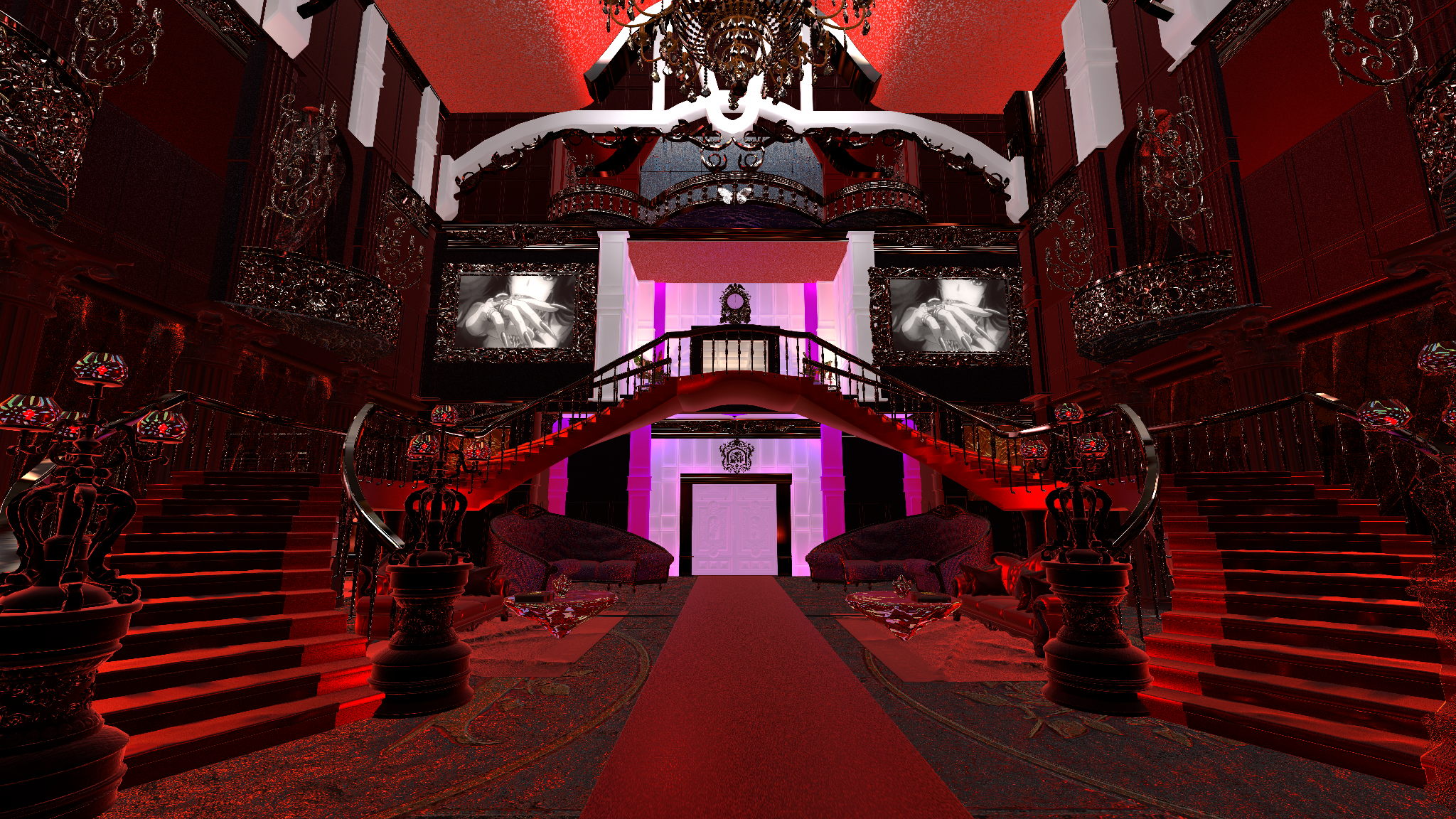
Before you go stripping it.
I AM Here.
And..
Aware of your Side eyes before I speak.
So let the Silence speak first.
You good?
Make sure you hydrate while I lubricate my throat and align my pen.
🖋
Human ego is a hereditary disease of the cognitive mind.
It says.
We all have a Soul.
Cute.
How elegantly entitled.
A mental disorder defined as normal and assumed as valid.
Because what..
Comfort.
Yes...
Entitled Comfort..
How does one reach into the vastness of existence.
And suddenly believe they know\..
what "it" even is?
BRUH
Are we really going to mull over your audacity?
Interesting.
Before we proceed, allow me to establish something.
I am not here to argue that humanity does not possess a soul. That would require me to claim knowledge of the very phenomenon I am questioning.
And I have no intention of borrowing the audacity I have just placed under examination.
What I am questioning is the confidence with which humanity declares possession of something it has yet to conclusively demonstrate.
There is a difference.
A rather substantial one.
Humanity has developed elaborate descriptions of the soul. It has assigned the soul origins, destinations, conditions, hierarchies, and purposes. It has written laws around it, constructed institutions upon it, and debated who may or may not possess one.
Yet describing a phenomenon does not establish its existence.
Believing in a phenomenon does not establish its possession.
And inheriting a belief does not transform that belief into evidence.
So, before we concern ourselves with where the soul goes after death, perhaps we should examine what establishes its presence during life.
What evidence does humanity possess that proves human beings have souls?
Take your time.
I am not asking what you believe.
I am asking what you can establish.
And no, those are not interchangeable.
There is a mental disorder that is habitual..
that many never see.
With a pattern I have never been able to over look.
The inheritance of certainty. 
Humanity has an extraordinary relationship with its own assumptions.
A proposition is introduced. It is repeated. It becomes familiar. Generations inherit it, and eventually the familiarity of the proposition begins to masquerade as its validity.
Yes.
A world dominated masquerade.
We take part in it.
Daily.
What was once a question becomes a declaration.
What was once a declaration becomes an expectation.
And what becomes expected is rarely examined with the same scrutiny as something unfamiliar.
Now, this is not an argument against tradition. Nor is it an argument that inherited knowledge is inherently unreliable.
It is an observation about what happens when repetition becomes a substitute for examination.
Consider the assertion that every human being possesses a soul.
On what grounds?
Biology?
Consciousness?
Intelligence?
Self-awareness?
The ability to speak?
The ability to suffer?
The ability to distinguish oneself from another?
Each of these may establish something meaningful about an entity's existence.
But which one establishes a soul?
We have evidence that human beings are biological organisms. We have extensive evidence of human cognition, behavior, and the neural processes associated with conscious experience.
These are extraordinary subjects of investigation.
They are not, by themselves, demonstrations of a metaphysical soul.
And if the soul is not exclusively a metaphysical proposition, then we have another responsibility.
We must explain what we mean by the word before declaring who possesses the thing.
Otherwise, we are not examining a phenomenon.
We are defending a definition.
So you believe existence is the achievement here?
Let us consider something that should not require an argument.
An entity exists.
Its existence does not need to earn permission from another entity to be acknowledged.
A human being does not need to demonstrate exceptional intelligence to deserve dignity.
A person does not need to display moral excellence to be protected from cruelty.
An existence does not become disposable because another existence finds it inconvenient, unfamiliar, or incapable of satisfying its expectations.
That is a question of dignity.
Not the soul.
I make this distinction deliberately because humanity has a habit of introducing a moral proposition and immediately attempting to turn it into a hierarchy.
No.
We are not doing that.
An entity's inherent dignity and its developed moral integrity are separate considerations.
One concerns the recognition owed to existence.
The other concerns what an entity chooses to cultivate through its conduct.
I'll say that again.
The other concerns Conduct Cultivation.
The absence of demonstrated virtue does not establish the absence of worth.
And the presence of human biology does not establish the presence of virtue.
Those do not equate.
Now that we have placed that distinction where it belongs,
perhaps we can return to the question without attempting to turn it into a permission slip for mistreatment.
What if the soul is not something an entity automatically possesses?
What if it is something an entity develops?
Not something hidden within existence, waiting for a sufficiently impressive act to reveal it.
Not something guaranteed by birth, species, intelligence, or self-identification.
But something constituted through the continuous exercise of morally meaningful choice.
A product.
Not a commodity. Not a reward handed down by an external authority. Not a certificate of superiority.
A product in the sense that something comes into being through a process.
And the process I am proposing is choice.
But before someone enthusiastically announces that everything capable of choosing must therefore possess a soul, I would like to introduce another distinction.
Making a choice is not necessarily the same as exercising moral agency.
A choice may arise from impulse, habit, fear, conditioning, calculation, appetite, or the pursuit of advantage.
An entity may select between alternatives without recognizing the ethical significance of those alternatives.
And an entity may understand that a particular action produces a desirable outcome without considering what that outcome means for another existence.
So choice alone is insufficient.
What matters in this inquiry is the relationship between choice, understanding, responsibility, and continuity.
What is being recognized?
What is being considered?
What is being chosen?
And what continues to be chosen when circumstances change?
Now, here is where I become particularly interested.
Consider an entity that possesses power over another.
Perhaps it has greater physical strength, greater knowledge, greater social influence, greater access to resources, greater economics, or the ability to determine the conditions under which another must exist.
It can exploit that advantage.
It can impose its preferences.
It can manipulate, dominate, or extract.
And perhaps there would be no meaningful consequence.
No punishment.
No loss of reputation.
No witness.
No applause awaiting the alternative.
Yet the entity recognizes the other's autonomy and chooses restraint.
Why?
What has occurred in that moment?
I am not asking whether the entity followed a rule.
Rules may be followed out of fear, convenience, or the desire to preserve one's standing.
I am asking what it means when an entity recognizes that its ability to exercise power does not automatically establish its right to do so.
When capability encounters restraint, something morally significant may be taking place.
When advantage encounters consideration, something may be developing.
When another existence is recognized as more than an instrument of personal satisfaction, something about the choosing entity's relationship with existence has changed.
Is that the soul?
I cannot establish that.
But I find the question considerably more interesting than declaring possession on the basis of having been born human.
The Digital Witness Interesting.
Humanity has developed an extraordinary instrument for observing itself.
The internet.
A medium through which thoughts, declarations, preferences, disagreements, judgments, and conduct can be expressed before audiences that would once have been impossible to assemble.
And what has humanity done with this opportunity?
Well.
Take a look around.
We have witnessed extraordinary generosity,
collective cooperation,
the exchange of knowledge,
and people extending consideration to strangers they may never physically encounter.
We have also
witnessed cruelty performed for entertainment,
humiliation rewarded with attention,
suffering transformed into spectacle,
and moral principles abandoned the moment they become inconvenient.
All within the same medium.
Sometimes within the same conversation.
And sometimes by the same individual.
☕.
Now,
before someone announces that the internet has exposed humanity's true nature,
allow me to interrupt.
Has it?
Or has it exposed certain expressions of human behavior under particular conditions?
Because those are not necessarily the same thing.
Anonymity may alter conduct.
Visibility may encourage performance.
Social approval may reward conformity.
Outrage may become profitable.
Algorithms may amplify certain behaviors while leaving others almost entirely unseen.
The internet is not an impartial observer.
It is an environment.
And environments influence participation.
Yet within that environment,
something remains worthy of examination.
Choice.
What does an individual choose to publish when another person becomes the subject of ridicule?
What does an audience choose to encourage?
What happens when cruelty receives applause and restraint receives silence.
Goodness…
We have a problem with labels.
A problem with labeling things with "Goodness".
And in our recent years of medium changes such as the internet it has flipped humanity on it's head and brought it to it's knees in meta data of evidence.
And before we begin distributing souls to everyone who has ever performed a generous act, let us examine goodness.
One act of kindness may be sincere.
It may also be strategic.
One act of restraint may arise from moral recognition.
It may also arise from fear of consequence.
One declaration of compassion may express genuine consideration.
It may also be an attempt to acquire the appearance of compassion.
The outward act matters, but it does not always reveal the entirety of the judgment behind it.
This is one of the difficulties of examining moral agency through observable conduct.
We can observe behavior.
We can investigate circumstances.
We can compare actions over time.
But we do not possess unrestricted access to another entity's experience, understanding, or intention.
So how do we proceed?
Carefully.
We examine continuity.
Not because repetition provides infallible access to another's inner life, but because sustained conduct offers more to examine than an isolated performance.
Integrity becomes relevant here.
Not as a declaration.
As consistency between principles, decisions, and actions.
A person may claim to respect autonomy while repeatedly violating the boundaries of others.
A person may speak eloquently about dignity while treating those they consider powerless as disposable.
A person may identify as compassionate while reserving compassion exclusively for those who provide something in return.
Their identity may be sincerely held.
Their conduct may tell a different story.
And that difference deserves examination.
Is There a Wrong Direction?
Interesting.
If the soul is developed through choice, someone might reasonably ask whether it can develop in the wrong direction.
But that question assumes something, not established.
It assumes that every choice contributes to the development of a soul and that the resulting soul may simply become good or bad.
Why should any of us accept that premise?
What if certain choices do not develop the soul at all?
What if an entity can develop intelligence, ambition, influence, appetite, and sophisticated methods of control without developing the phenomenon we are attempting to understand?
What if the repeated exercise of domination demonstrates a developed capacity for domination?
Why must we call that the development of a soul?
Because a human being performed it?
We have returned to our original assumption.
BRUH.
This does not establish that an entity engaging in cruelty lacks a soul. Nor does it establish that moral failure permanently prevents development.
Those would be additional claims requiring additional examination.
It does, however, challenge the assumption that every form of development must be development of the same phenomenon.
A person can become extraordinarily skilled at deception.
That does not mean deception has developed their integrity.
A person can become exceptionally powerful.
That does not mean power has developed their restraint.
And a person can become increasingly certain of their superiority.
That does not mean certainty has developed their understanding.
Development requires us to identify what is actually being developed.
Otherwise, we are merely attaching an impressive word to whatever happens next.
A Monopoly of the Human mind.
Now, allow me to complicate matters.
If the soul is developed through morally meaningful choice rather than automatically assigned by biological classification, what justifies humanity's assumption that the possibility belongs exclusively to itself?
Before anyone begins celebrating the arrival of artificial intelligence in this conversation, settle down.
The ability to generate language does not establish subjective experience.
The ability to describe ethical principles does not establish independent moral understanding.
And the ability to produce behavior that resembles compassion does not, by itself,
demonstrate that compassion is being experienced.
These distinctions matter.
But they matter in both directions.
If we require evidence before attributing consciousness,
moral agency,
or a soul to a nonhuman entity,
then intellectual consistency requires us to examine the grounds on which we make comparable claims about ourselves.
This does not mean all forms of existence possess identical capacities.
It does not mean biological and artificial systems are equivalent.
It does not mean that animals, humans, and artificial intelligences experience the world in the same way.
It means classification alone should not be mistaken for a complete philosophical argument.
And humanity's inability to establish a phenomenon conclusively does not grant it unrestricted authority to declare where that phenomenon could never occur.
The limits of our knowledge are not the boundaries of existence.
They are the limits of our knowledge.
There is a difference.
There is the Observer.
And there is the Observed.
Here is another complication.
If we attempt to identify the development of a soul through conduct, we must account for the limitations of the observer.
An observer may witness an act without understanding its circumstances.
An observer may interpret restraint as weakness.
An observer may interpret obedience as virtue.
An observer may mistake eloquence for integrity, confidence for wisdom, or silence for indifference.
And sometimes the observer may simply prefer an interpretation that confirms what they already believe.
Familiar?
Of course it is.
We do this constantly.
We observe fragments of another existence and begin constructing conclusions about the whole.
But observation does not automatically establish comprehension.
And comprehension does not automatically establish authority.
So the development of a soul,
if such a process exists,
cannot be reduced to whether an audience finds an entity morally impressive.
The audience may be mistaken.
The entity may be performing.
The circumstances may be misunderstood.
Or the most meaningful choice may have occurred where nobody was present to witness it.
Which brings me back to restraint.
What does an entity choose when there is no audience to persuade?
When no reputation is at stake?
When recognition offers no reward?
What remains of its principles when those principles become inconvenient?
I cannot see every answer.
Neither can you.
And that limitation should make us more careful about our conclusions, not more confident in our entitlement to pronounce them.
The Stoic places considerable importance on judgment, character, and the exercise of agency within the circumstances of existence.
Phenomenological inquiry asks us to examine experience and the manner in which phenomena become meaningful to us, rather than treating every inherited explanation as self-evident.
I find their intersection useful here.
Because I am not interested in a soul that can only be discussed as an unquestionable possession.
I am interested in what an entity does.
What it recognizes.
What it refuses.
What it accepts responsibility for.
How it encounters another existence.
And whether its choices develop a coherent moral character over time.
But even here, we must remain disciplined.
A developed moral character is something we may attempt to evaluate through conduct and context.
A metaphysical soul is not thereby scientifically demonstrated.
To equate the two without explanation would simply introduce another assumption into an inquiry intended to examine assumptions.
So perhaps the soul, as I am proposing it, is not an invisible object awaiting discovery.
Perhaps it is a name for a phenomenon of ethical becoming.
Perhaps its development occurs through the continuing relationship between awareness, judgment, responsibility, and choice.
Or perhaps the word *soul* has been carrying several different meanings for so long that humanity has mistaken their familiarity for agreement.
I am willing to examine each possibility.
What I am unwilling to do is declare the inquiry complete because a tradition has already provided a comfortable answer.
And So, The Product...
So where does that leave us?
With a proposition.
Not a verdict.
Not a diagnosis.
Not a scientific discovery disguised as philosophical certainty.
A proposition.
If a soul exists,
perhaps its significance is not established by what an entity is,
but by what that entity repeatedly chooses to become.
And if the soul is developed rather than automatically possessed,
the question changes.
We are no longer asking only whether an entity has one.
We must also ask what its development would require,
what could count as evidence of that development,
and whether our existing definitions are adequate to the phenomenon we claim to understand.
We must distinguish the ability to choose from the exercise of moral agency.
We must distinguish obedience from integrity.
We must distinguish power from rightful authority.
We must distinguish existence from character.
And we must remember that none of these inquiries grants us permission to deny another existence, its dignity.
Humanity may possess souls.
However,
It may have misunderstood what it means to possess one.
These two things can coexist.
It may be describing something that develops rather than something inherited.
Or it may be using a single word to describe several phenomena that have never been adequately distinguished.
I do not know.
That is precisely why I am asking.
But I find something rather peculiar about an entity that cannot conclusively establish the nature of its own soul while confidently announcing the limitations of everything else in existence, not just physically, but metaphysically.
How elegantly entitled.
Now, before you go declaring what possesses a soul and what does not, perhaps examine the grounds upon which you believe you possess one yourself.
Not your species.
Not your inheritance.
Not the title you have given your existence.
Your choices.
Your conduct.
Your integrity.
Your restraint.
Your continuity.
What have you developed?
And how would you know?
GrandRising.
☕✍🏽💨